
Five objections come up on cold calls again and again. Here is the line we recommend at CallPrompter for each one, and the question to ask right after it:
- “I’m not interested.” Say: “That’s fair, you weren’t expecting my call. Is it the timing, or is [problem] just not something you deal with?”
- “I’m busy.” Say: “No problem, I caught you in the middle of something. Can I take thirty seconds on why I called, and you decide if it’s worth a proper call?”
- “Just send me an email.” Say: “Happy to, and I’ll keep it short. What’s the one thing the email should answer for you?”
- “We’re happy with what we have.” Say: “That makes sense, and I’m not asking you to replace anyone on this call. What does the current setup handle well, and where does it still leave work on your side?”
- “We don’t have the budget.” Say: “Fair, and I’m not asking you to spend anything on this call. Is there no budget for this kind of thing this year, or has it never been worth budget so far?”
The other seven, from “It’s not a priority right now” to “I need to run it by my boss,” are in the table below. All 12 have a full script further down, including what to say when the objection comes back a second time.
Key takeaways
- Every response on this page is a locked line (a line you say word for word on every call) plus one question, short enough to take in at a glance.
- When the same objection comes back a second time, exit cleanly and leave the door open, or book a small, dated next step. A third rebuttal puts the next call at risk.
- Acknowledge, Clarify, Respond, Next step is the pattern behind all 12 responses, and the one to fall back on when you hear an objection that is not on the list.
- Give your price in one flat sentence, then ask a question. Transparent pricing has been technology buyers’ top wish from vendors in every TrustRadius survey since 2023.
- Never ask who the prospect’s current provider is. Ask what the current setup still leaves undone.
- The 12 are the ones independent sales trainers and trade sources keep naming. No independent study we found publishes how often each one occurs.
- A response you have to read arrives too late. Cut the 12 to a cue sheet that fits on one page and rehearse it out loud before your next round of calls.
CallPrompter is real-time sales coaching software for live calls, built in Männedorf, Switzerland. CallPrompter’s desktop app for macOS and Windows shows B2B sellers the answer to an objection while the call is still running.
All 12 cold call objections and responses on one screen
| # | The objection | What it usually means | What to say |
|---|---|---|---|
| 1 | “I’m not interested.” | A reflex to end an interruption. They don’t know yet what you offer. | “That’s fair, you weren’t expecting my call.” |
| 2 | “I’m busy.” / “Now’s not a good time.” | Bad timing or a polite no. You can’t tell which yet. | “No problem, I caught you in the middle of something.” |
| 3 | “Just send me an email.” | A polite exit, or a real wish to read first. | “Happy to, and I’ll keep it short.” |
| 4 | “We’re happy with what we have.” / “We already have someone for that.” | They have a provider. That says nothing yet about gaps. | “That makes sense, and I’m not asking you to replace anyone on this call.” |
| 5 | “We don’t have the budget.” | No money for this, or no reason yet to find money. | “Fair, and I’m not asking you to spend anything on this call.” |
| 6 | “It’s not a priority right now.” / “Call me back later.” | Something else is ahead in the queue. | “Makes sense, something more urgent always comes first.” |
| 7 | “I’m not the right person.” | They may be right, and they probably know who is. | “Thanks for telling me, that saves us both time.” |
| 8 | “How did you get my number?” | A fair question with an edge. They want the truth and a way out. | “From [source]. If you’d rather I didn’t call this number, I’ll take it off my list now.” |
| 9 | “What is this about?” / “Is this a sales call?” | They want the purpose before they give you any time. | “Yes, it’s a sales call. I work with teams like yours on [problem].” |
| 10 | “How much does it cost?” | Interest, or a quick way to rule you out. | “It’s [price per unit].” |
| 11 | “We don’t need this.” | They don’t see the problem, or they solved it another way. | “You may be right, and I’d rather find that out now than take up your time.” |
| 12 | “I need to run it by my boss.” | Often a polite no, sometimes a real approval step. | “Makes sense, nobody should decide this on one call.” |
We picked these 12 because they recur across independent sales-training and trade sources (Sandler, RAIN Group, Josh Braun, Art Sobczak and Built In among them), and because three of them are questions and stalls every caller has to be ready for in the first minute: how you got the number, what it costs, and who else has to agree. The list is practitioner consensus. No independent study we found publishes how often each objection occurs. We publish no count of our own.
Acknowledge, Clarify, Respond, Next step: the pattern behind every response
All 12 scripts on this page run on the same four stages, in the same order. The locked line acknowledges, the question clarifies, and what the prospect says next decides your response and the next step. Learn the pattern and you have a response for the objection nobody warned you about.
The pattern adapts the LAER model (Listen, Acknowledge, Explore, Respond) that Carew International teaches, and adds Sandler’s rule that every cold call should end with a yes, a no, or a clear next step.
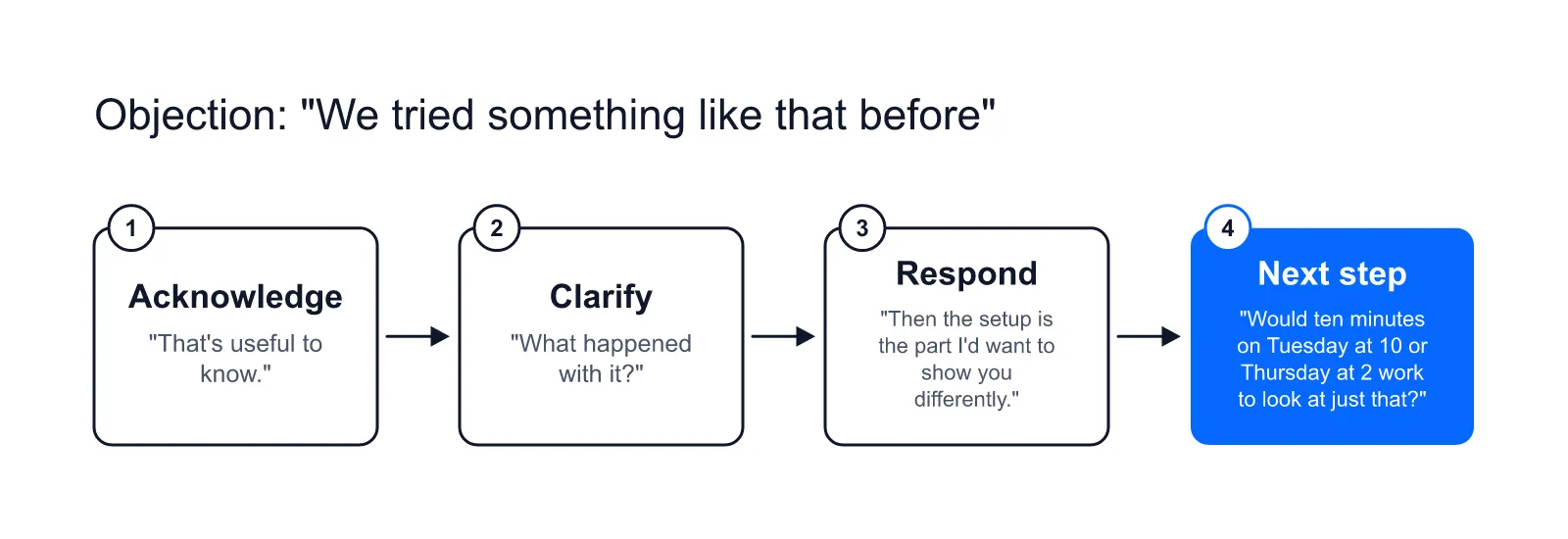
Here it is on an objection that is not in the list, “We tried something like that before”:
- Acknowledge. Accept what they said as a fact, with no “but” after it. “That’s useful to know.”
- Clarify. Ask one question to find the real concern behind the words. “What happened with it?”
- Respond. Answer the concern they just named in one sentence, even if it isn’t the one you prepared for. “Then the setup is the part I’d want to show you differently.”
- Next step. Ask for a small, specific commitment. “Would ten minutes on Tuesday at 10 or Thursday at 2 work to look at just that?”
The next step doesn’t have to be a meeting. When the prospect stays on the line and starts describing their situation, the next step is the next discovery question, a question about how they handle the problem today, asked while you have their attention.
1. “I’m not interested”
What it usually means: A reflex to end an interruption. They don’t know yet what you offer, so they can’t be uninterested in it.
Say this: “That’s fair, you weren’t expecting my call.”
Then ask: “Is it the timing, or is [problem] just not something you deal with?”
If it comes back a second time: “Understood, I’ll leave it there. Is it all right if I try you again next quarter?”
Don’t say: “Most people say that before they hear what we do.” It tells the prospect they’re wrong in the first ten seconds of the call.
The sales trainer Josh Braun recommends one either/or question here instead of a rule for how many times you may push. Either answer tells you something: bad timing gets a callback, no problem gets a clean exit.
2. “I’m busy” / “Now’s not a good time”
What it usually means: Bad timing or a polite no. You can’t tell which yet, and neither can they until they hear why you called.
Say this: “No problem, I caught you in the middle of something.”
Then ask: “Can I take thirty seconds on why I called, and you decide if it’s worth a proper call?”
If it comes back a second time: “Then not now. Is Tuesday at 10 or Thursday at 2 better for ten minutes?”
Offer two named times, never “when’s good for you?” The easiest answer to an open question is “I’ll get back to you.”
3. “Just send me an email”
What it usually means: A polite exit, or a real wish to read before deciding. The question after your line tells you which.
Say this: “Happy to, and I’ll keep it short.”
Then ask: “What’s the one thing the email should answer for you?”
If it comes back a second time: “Then I’ll send it today and call Thursday morning to hear whether it answered that. Does that work?”
A prospect who names the one thing has given your email its subject line. One who won’t name anything has told you the email was the exit.
In insurance and financial advisory, this objection sounds like “Send me a comparison.” Use the same structure: agree, then narrow it.
- Say this: “Glad to. I’ll compare the parts that matter to you.”
- Then ask: “Which one thing should the comparison cover first?”
4. “We’re happy with what we have” / “We already have someone for that”
What it usually means: They have a provider. That says nothing yet about whether the provider covers everything.
Say this: “That makes sense, and I’m not asking you to replace anyone on this call.”
Then ask: “What does the current setup handle well, and where does it still leave work on your side?”
If it comes back a second time: “Good, then I won’t invent a problem. When does that arrangement next come up for review?”
Don’t say: “Who are you using at the moment?” It turns the call into a comparison with a vendor you can’t see, and asks the prospect to defend a decision they already made.
At CallPrompter, these are the four signals we listen for to tell whether a happy prospect is worth another minute:
- “It’s fine, but…”: anything after but is the opening
- They describe a workaround (“we export it and then…”)
- Their answer is about someone else: “my team finds it clunky”
- The contract renews within a year
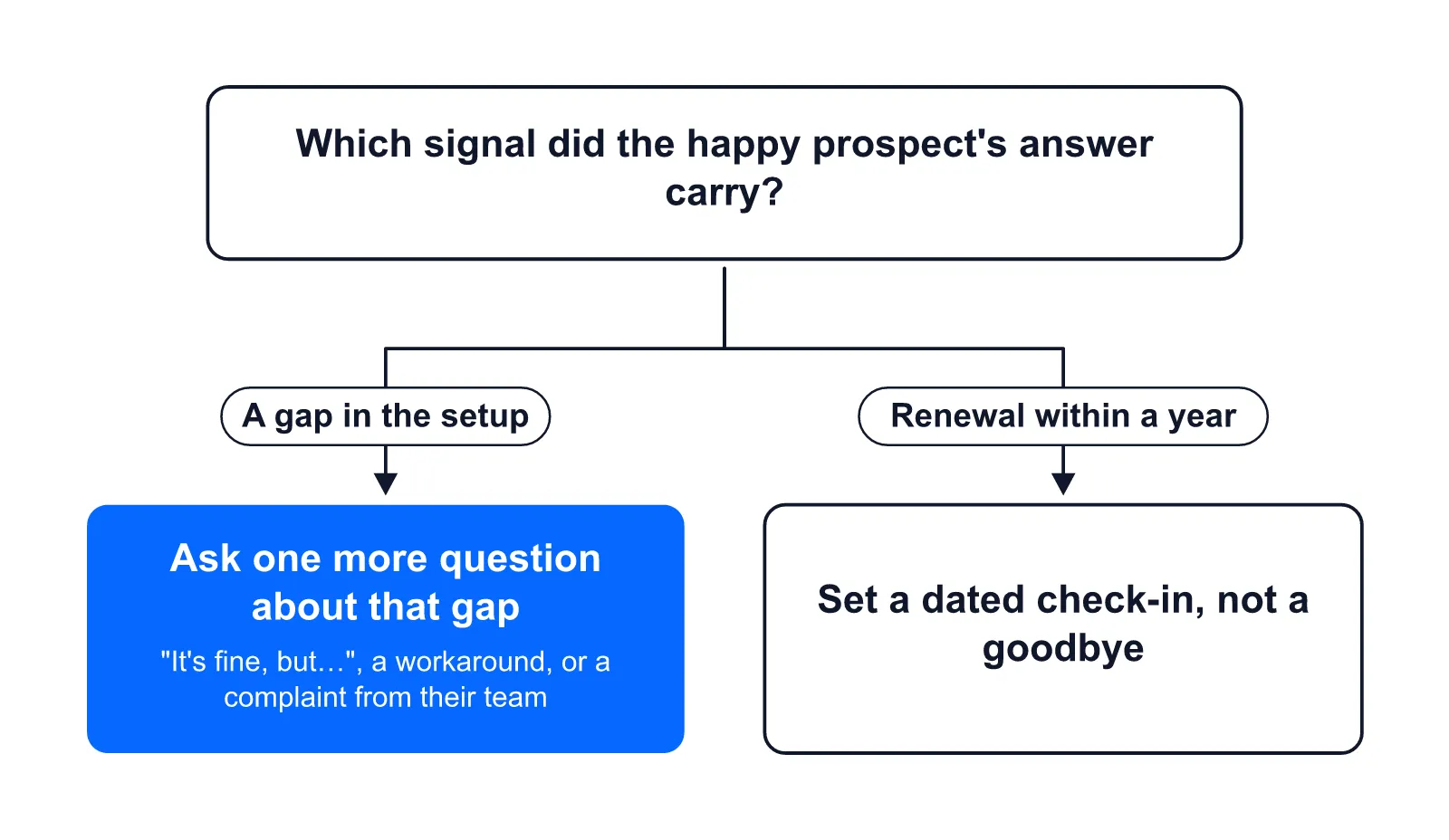
The first three mean you ask one more question about that gap. The fourth turns a happy answer into a dated check-in instead of a goodbye. We cover both branches, and why you never ask who the current provider is, in the full script for “we already have someone for that”.
In insurance and financial advisory, this objection is “I already have cover.” Ask about scope, never quality.
- Say this: “Good, that means the core is taken care of.”
- Then ask: “Does it cover [specific need] as well, or is that handled separately?”
In US life insurance and annuities, the restraint is also a compliance matter. State replacement rules (the rules for selling a policy that replaces one the client already holds) are based on the NAIC’s Model Regulation 613 and treat deceptive or misleading information in sales material as a violation, so never run down the policy the prospect already has. Each state adopts the model in its own form.
5. “We don’t have the budget”
What it usually means: No money for this, or no reason yet to find money. Early in a cold call, it’s usually the second.
Say this: “Fair, and I’m not asking you to spend anything on this call.”
Then ask: “Is there no budget for this kind of thing this year, or has it never been worth budget so far?”
If it comes back a second time: “Understood. When does next year’s budget get set? I’d like to call a few weeks before that.”
The first answer is a timing problem and gets a date. The second is a value problem, and that belongs on a booked call, not in the first minute of a cold one.
6. “It’s not a priority right now” / “Call me back later”
What it usually means: Something else is ahead in the queue. “Later” without a date usually means no.
Say this: “Makes sense, something more urgent always comes first.”
Then ask: “What would have to change for this to move up the list?”
If it comes back a second time: “Then let’s make later a date. Is the first week of [month] realistic?”
The answer (a project ending, a hire starting, a budget cycle) tells you when to call back. Write it down.
7. “I’m not the right person”
What it usually means: They may be right, and they probably know who is.
Say this: “Thanks for telling me, that saves us both time.”
Then ask: “Who looks after [area] on your side?”
If it comes back a second time: “No problem, I’ll find the right person myself and leave you out of it.”
Don’t push for a name twice. The promise to leave them out keeps the door open for a later call.
8. “How did you get my number?”
What it usually means: A fair question, often with an edge. They want the truth and a way out.
Say this: “From [source]. If you’d rather I didn’t call this number, I’ll take it off my list now.”
Then ask: “Otherwise, can I tell you in one sentence why I called?”
If it comes back a second time: “Done, you’re off my list. Sorry for the interruption.”
Name the real source: a directory, their company website, a referral, a list you bought. Then keep the promise.
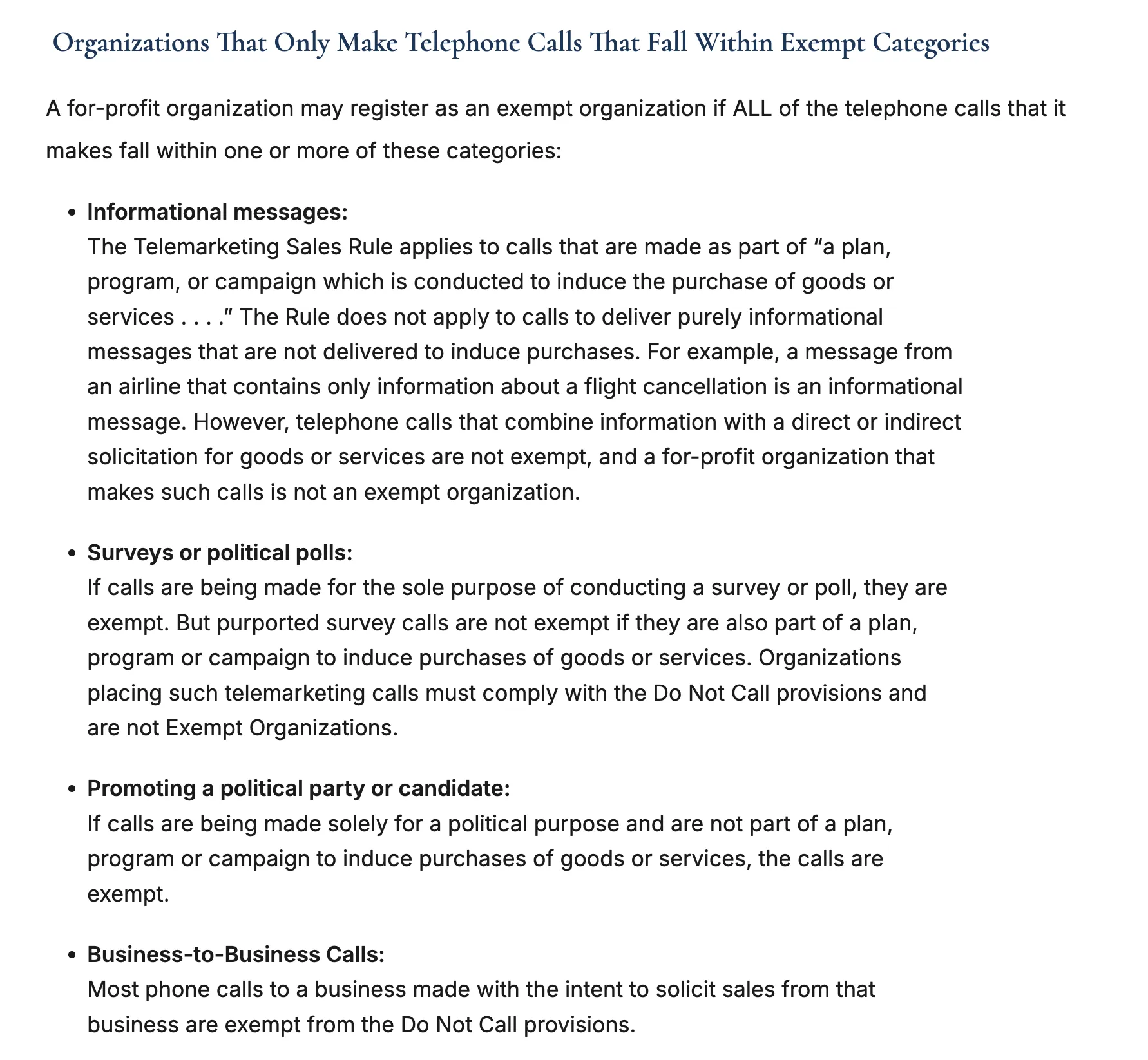
The rules behind this question depend on who you call and where, and what follows is general information, not legal advice. In the US, the FTC says most calls to a business to sell to that business are exempt from the National Do Not Call provisions. Calls to consumers are not, and FCC rules require consent for autodialed or prerecorded calls to a mobile number whether or not it is on the Registry. That matters for reps who call households, as many insurance reps do. In the UK, business numbers can also opt out, through the Corporate TPS register, which the ICO’s telephone marketing guidance covers. In the EU, the rules for live marketing calls differ by country.
9. “What is this about?” / “Is this a sales call?”
What it usually means: They want the purpose before they give you any time. From an assistant or a receptionist, it’s a screening question.
Say this: “Yes, it’s a sales call. I work with teams like yours on [problem].”
Then ask: “Is that something you’re dealing with right now?”
If it comes back a second time: “Then I won’t keep you. Thanks for picking up.”
Don’t say: “No, not really, I just wanted to ask a few questions.” If the first thing you tell a prospect is untrue, every sentence after it is suspect. In the US it can also be a legal problem: the FTC’s March 2024 rule extended the ban on misrepresentations to business-to-business telemarketing.
For “What is this about?”, drop the “yes” and give the same one-sentence purpose.
10. “How much does it cost?”
What it usually means: Interest, or a quick way to rule you out. Either way, a dodge sounds like you’re hiding something.
Say this: “It’s [price per unit].” If you have no list price: “It runs [low to high], depending on how many people use it.”
Then ask: “How many people would be using it?”
If it comes back a second time: “Understood. If it’s worth fifteen minutes to see what it would replace, Thursday at 2 works. If not, I’ll leave it there.”
Don’t say: “It depends.” Everything depends. The prospect hears that you won’t tell them.
On our own sales calls, CallPrompter answers the price question with one flat line: “$99 a month for Starter, $249 per seat for Pro.” Those are our list prices as of September 2026. Our founder’s rule for saying it: “Said flat, no cushion, no apology. Improvising around a price is how discounts happen.”
Not every trainer agrees. Sandler and Art Sobczak both advise holding the price back until you have established value, and Sandler’s reason is that an early number anchors the prospect. We still give the number, as a price or a range in one sentence, and let the question after it bring the conversation back to the prospect. Buyer research points the same way. In the TrustRadius 2026 B2B Buying Disconnect Report, a January 2026 survey of 1,862 technology buyers, transparent pricing was buyers’ top wish-list item for vendors for the fourth year running. Those are software buyers rating vendors in a survey, so the finding shows what buyers want and says nothing about how a cold call ends.
11. “We don’t need this”
What it usually means: They don’t see the problem, or they solved it another way. You don’t know which yet.
Say this: “You may be right, and I’d rather find that out now than take up your time.”
Then ask: “How do you handle [problem] today?”
If it comes back a second time: “Then you’re covered. Thanks for the straight answer.”
A prospect who describes a manual workaround has just told you the need exists. One who describes a working solution has told you to leave, and you should.
12. “I need to run it by my boss”
What it usually means: On a cold call, often a polite no. Sometimes a real approval step. Either way, the boss hasn’t heard of you.
Say this: “Makes sense, nobody should decide this on one call.”
Then ask: “What would your boss want to know first?”
If it comes back a second time: “Then let’s bring them in. Would fifteen minutes with both of you on Tuesday at 10 or Thursday at 2 work?”
If they can’t say what the boss would want to know, the objection was the exit.
Questions about cold call objections
Should you give your price on a cold call?
Yes, in one flat sentence, followed by a question. If you have no list price, give a range and the main factor that moves it, then ask how many people would use it.
How many times should you respond to the same objection?
Twice at most. Answer the first time with your locked line and question. The second time, exit cleanly or book a small dated next step. No published study sets a number, and practitioners from Sandler to Josh Braun advise one question, then accepting the answer.
How to turn the 12 into a cue sheet you can use live
A list of 12 scripts only helps if you can use it while someone else is talking. Our founder’s rule for anything a seller looks at mid-call: “if the seller has to read it, it’s too much. A live card has to be absorbed in a glance while someone else is talking.”
So cut the list down to a cue sheet: all of your cues, short enough for one screen or one page.
- Keep two lines per objection. The locked line and the question. Leave the explanations on this page.
- Put your own words in the brackets. Replace [problem], [source] and [price per unit] with what you actually sell before the first dial, never during the call.
- Order it by what you hear most. Your first few call blocks will tell you which five you hear most. Move those to the top.
- Rehearse it out loud before the call block. Say each line to a colleague or a simulated buyer until it comes without reading. Reading a line in your head is not rehearsal.
Cold call cue sheet
Two lines per objection: the locked line, then the question.

1. "I'm not interested"
   Say: "That's fair, you weren't expecting my call."
   Ask: "Is it the timing, or is [problem] just not something you deal with?"

2. "I'm busy" / "Now's not a good time"
   Say: "No problem, I caught you in the middle of something."
   Ask: "Can I take thirty seconds on why I called, and you decide if it's worth a proper call?"

3. "Just send me an email"
   Say: "Happy to, and I'll keep it short."
   Ask: "What's the one thing the email should answer for you?"

4. "We're happy with what we have" / "We already have someone for that"
   Say: "That makes sense, and I'm not asking you to replace anyone on this call."
   Ask: "What does the current setup handle well, and where does it still leave work on your side?"

5. "We don't have the budget"
   Say: "Fair, and I'm not asking you to spend anything on this call."
   Ask: "Is there no budget for this kind of thing this year, or has it never been worth budget so far?"

6. "It's not a priority right now" / "Call me back later"
   Say: "Makes sense, something more urgent always comes first."
   Ask: "What would have to change for this to move up the list?"

7. "I'm not the right person"
   Say: "Thanks for telling me, that saves us both time."
   Ask: "Who looks after [area] on your side?"

8. "How did you get my number?"
   Say: "From [source]. If you'd rather I didn't call this number, I'll take it off my list now."
   Ask: "Otherwise, can I tell you in one sentence why I called?"

9. "What is this about?" / "Is this a sales call?"
   Say: "Yes, it's a sales call. I work with teams like yours on [problem]."
   Ask: "Is that something you're dealing with right now?"

10. "How much does it cost?"
   Say: "It's [price per unit]."
   Ask: "How many people would be using it?"

11. "We don't need this"
   Say: "You may be right, and I'd rather find that out now than take up your time."
   Ask: "How do you handle [problem] today?"

12. "I need to run it by my boss"
   Say: "Makes sense, nobody should decide this on one call."
   Ask: "What would your boss want to know first?"
Rehearsal pays off because cold calls repeat. Our founder’s test: if you will have roughly the same call fifty more times, with the same product, the same buyer type and the same handful of objections, “rehearsal compounds.” A call block is exactly that call. His shorter version: “the objection you can handle is the one you saw coming.”
A locked line said word for word can still sound like a recording. How to keep it natural is its own skill, and we cover it in how to follow a sales script without sounding scripted.
For sales leaders: give the whole team one locked line per objection. Every rep then says the same tested words, and when a line stops working, you change it once. The Bridge Group’s 2025 SDR report, a survey of 351 B2B companies, puts average SDR ramp at 3.0 months and finds reps on phone-centric teams averaging 4.6 quality conversations a day. A new rep gets a handful of real conversations a day to learn the 12 on, so the rehearsal belongs before the calls.
What these responses look like as a live prompt
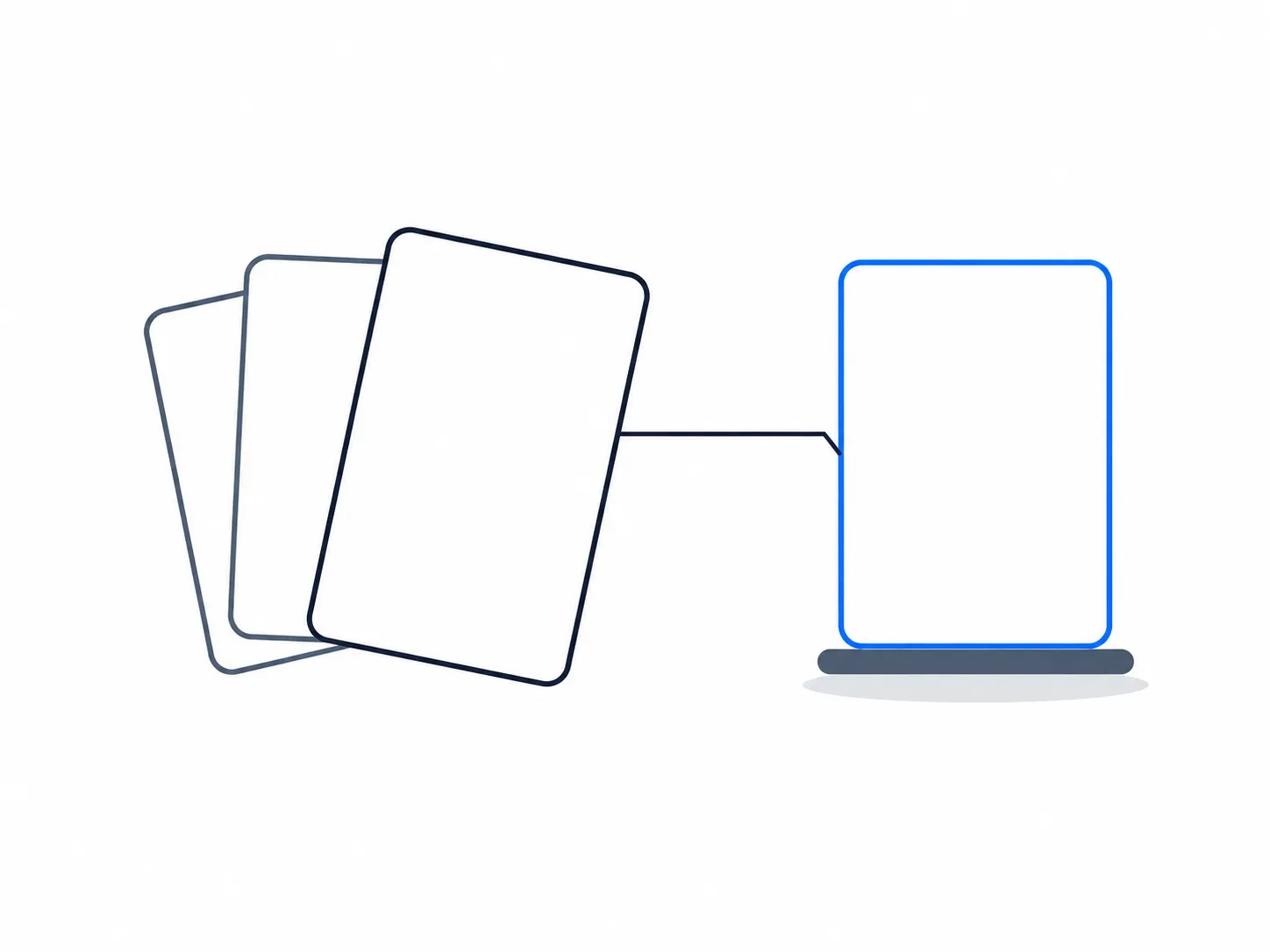
The same list can sit on your screen during the call. In CallPrompter, you write your locked lines into a script and its objection library, the list of objections with the answers you wrote for each. During the live call, the desktop app follows the conversation by semantic matching, which tracks the meaning of what is said instead of waiting for an exact phrase. When it detects an objection, the response you wrote for it appears beside the meeting window as an Objection / Response card. The card shows what you wrote, so the cue sheet you build from this page is exactly what you will see.
Before a live prospect hears the lines, you can run the same script in AI practice mode, against a simulated buyer who interrupts and pushes back out loud.
The free trial runs seven days with no credit card and includes the objection library and 30 minutes of AI practice. Live call coaching is on the paid plans and is not part of the trial. Put your 12 locked lines into a script and drill them against the simulated buyer before your next call block.
Related posts
How to Handle the Incumbent Objection on a Sales Call: Answering "We Already Have Someone for That" Without Naming a Competitor
How to Follow a Sales Script Without Sounding Scripted, Robotic, or Like You're Reading It